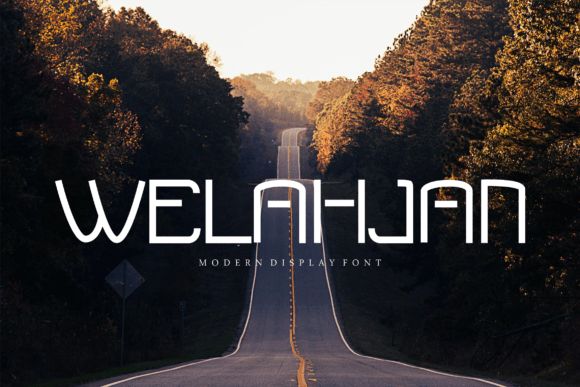
Welahjan Display Font for Handmade Product Branding
The first time I dropped Welahjan onto a candle label mockup, I knew I had found something different. I was sitting at my worktable, tweaking the typography for a new batch of soy candles I planned to list in my shop, and nothing I had tried felt right. The clean sans serifs I usually turned to felt too quiet. The script fonts I loved on greeting cards looked fussy and out of place on a clean glass jar. Then I opened the Welahjan typeface and set the word “Ember” in all caps. The weight landed solid. The letterforms felt bold without shouting. And the subtle authentic charm of the display font made the whole label look like something from a boutique brand, not a kitchen-table experiment. That moment is why I want to share what I have learned testing Welahjan across real product materials, from stickers and tags to packaging and digital printables. If you are a maker, a handmade seller, or a printable creator looking for a modern, bold, and authentic display font that actually holds up in production, this review is for you.
Welahjan Display Font for Candle Labels and Product Branding
When I test a new font for physical products, I start with candle labels because they reveal everything about readability, ink behavior, and visual presence. Welahjan performed beautifully on kraft paper labels printed with a laser printer. The bold stroke weight meant the lettering stayed crisp even at smaller sizes, which matters when you are fitting a scent name like “Cedar + Sage” onto a narrow jar front. I also tested Welahjan on clear adhesive labels for a set of bath salts. The authentic, grounded feel of the typeface gave the packaging a handmade look that still felt polished enough for gifting. For product branding, Welahjan works best as the hero text: the product name, the brand name, or a short tagline. I would not recommend it for lengthy ingredient lists or tiny fine print, but as a display font, that is not its job. Its job is to stop a shopper’s eye on a crowded shelf or a scrolling Etsy feed, and it does that well. If you sell candles, soaps, skincare, or small-batch goods, Welahjan can become the visual anchor of your packaging identity.
Using Welahjan for Wedding Invitations and Event Stationery
I design a fair amount of wedding stationery for my printable shop, and the challenge is always balancing elegance with readability. Welahjan struck a surprising balance here. I used it for the couple’s names on a welcome sign mockup and paired it with a simple serif for the body text. The bold display lettering gave the sign presence without overwhelming the delicate floral border. For invitation suites, I found Welahjan works beautifully on the main headline—the couple’s names or the phrase “You Are Invited”—but I recommend using a lighter, more neutral companion font for the ceremony details and directions. The font shines in short, impactful lines. I tested it on a set of bridal shower tags and a “Mr & Mrs” header for a seating chart template, and in both cases, the authentic character of the typeface added a warm, confident tone. If you create invitation templates, wedding signage, or event printables, Welahjan offers a modern alternative to script-heavy or overly decorative display fonts. It feels current but not trendy, which means your designs stay relevant longer.
Welahjan for T-Shirt Printing and Merchandise Design
Merchandise design is where Welahjan really gets to stretch its legs. I tested the font on a few t-shirt mockups using heat transfer vinyl and screen-print style layouts. The bold weight of this display font translates exceptionally well to fabric. Single-word designs like “RISE,” “WILD,” or “STUDIO” came out clean and readable from across the room. I also experimented with layered designs, pairing Welahjan with a distressed graphic underneath, and the contrast worked perfectly. For tote bags, I used Welahjan for a simple shop name layout and was impressed by how the letterforms held their shape on canvas. The font does not get lost in the texture of the fabric. If you sell custom apparel, merch for a small brand, or even esports-inspired gear, Welahjan fits that bold, authentic vibe without feeling generic. I will note that for extremely small text on merchandise—think tiny back-neck labels or inside tags—this is not the font you want. Save it for the statement pieces. Chest logos, center-back designs, and sleeve accents are where Welahjan earns its place on a garment.
Readability and Pairing: Making Welahjan Work on Physical Products
One of the first questions I ask about any display font is how it behaves on different materials and at different scales. Welahjan handles scaling very well. I tested it at 72 point for a large wall art printable and at 18 point for a small product tag. At larger sizes, the authentic character of the letterforms becomes a design feature. At smaller sizes, the font remains legible as long as the text is short. I would avoid using Welahjan for anything below 14 point on physical products, especially if you are cutting letters with a Cricut or Silhouette machine. The thicker strokes cut cleanly, but intricate details in some glyphs may lose definition at very small scale. For best results, I recommend pairing Welahjan with a clean sans serif like Montserrat, Lato, or even a simple handwritten script for contrast. The bold presence of Welahjan needs breathing room, so keep your layouts spacious. On packaging, I let Welahjan take the headline and use a lighter font for descriptions. On printables, I use it for the header and center the layout around that strong visual entry point. This typeface rewards intentional spacing and simple compositions.
Commercial Licensing and Production Tips for Welahjan Font
Before you start selling products made with Welahjan, it is essential to check the commercial licensing included with your download. Most display fonts for handmade sellers require a standard license for physical goods like t-shirts, mugs, stickers, and printed packaging. If you plan to sell digital templates, printables, or SVG-style cut files that include the font outlines, you may need an extended license. I always verify the number of end products allowed under the license and whether my production volume stays within the permitted range. For Welahjan, the included file formats typically cover OTF, TTF, and sometimes WOFF for web use. I recommend installing the OTF version for print design and keeping the TTF as a backup for cutting machine software. Multilingual support is another consideration—if you create products with accented characters or special glyphs, check that Welahjan covers the languages you need. I tested it with French and Spanish accents on a set of gift tags, and the characters rendered correctly. As a final production tip, always convert your text to outlines before sending files to a printer or uploading to a print-on-demand platform. This ensures the font appears exactly as designed, no matter what system processes the file.
After working with Welahjan across candle labels, wedding stationery, t-shirt mockups, tote bags, product tags, and printable wall art, I can say this display font earns a spot in any serious maker’s type library. It is bold without being aggressive. It is authentic without feeling rough. And it adapts to paper, fabric, vinyl, and digital formats with reliable consistency. If you are building a brand identity for your shop, designing a seasonal product line, or refreshing your packaging, Welahjan gives you a modern, confident voice that customers will recognize and trust. That is exactly what a handmade brand needs.